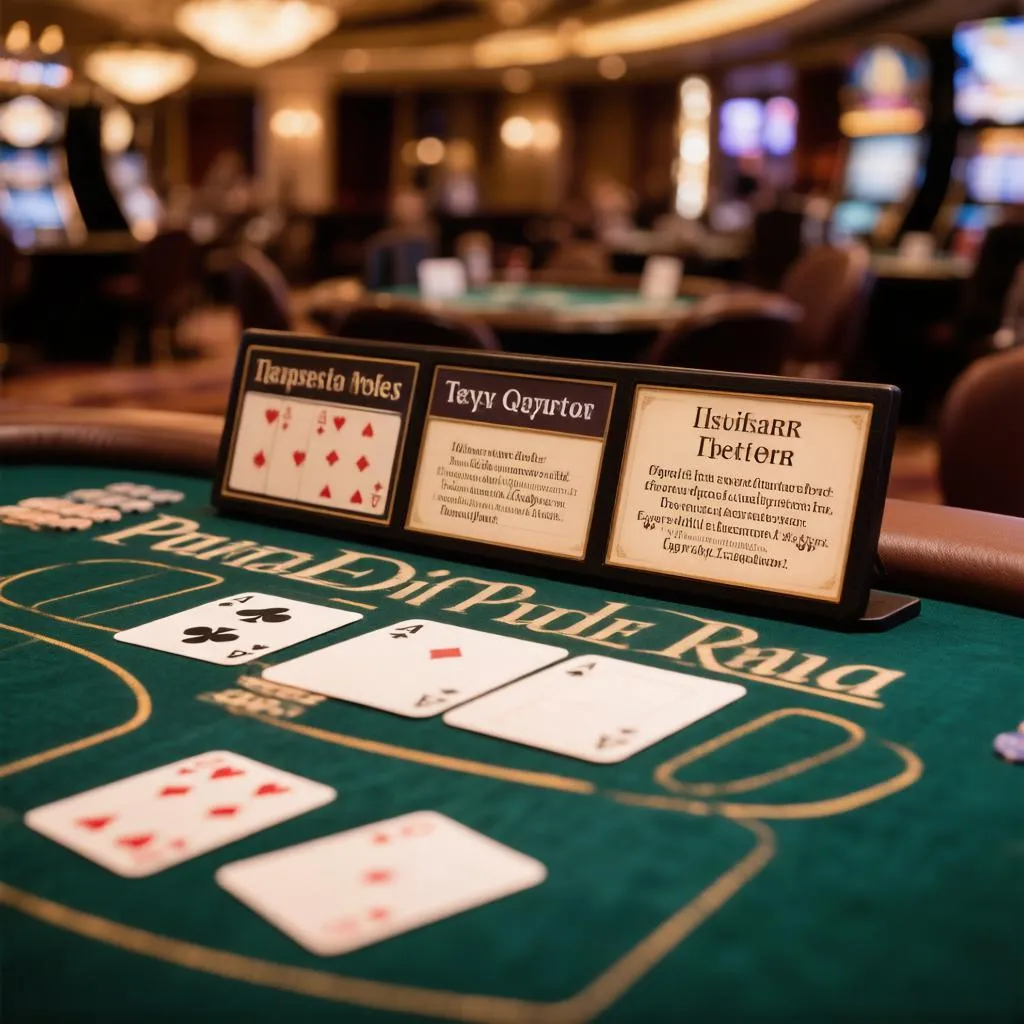
Walk past the poker tables in most casinos and you will find games that carry poker’s name but have nothing to do with bluffing opponents. Pai Gow Poker and Three Card Poker both deal you a hand, both pay on rankings you already know from hold’em or five-card draw, and both settle every round against the house. That shared DNA makes them natural rivals for the same player’s attention, yet they play almost nothing alike.
One is a slow, two-handed puzzle about dividing seven cards. The other is a lightning-fast bet on three cards. Understanding how each works, what the odds really cost and where side bets try to change the subject is the difference between picking a game that fits you and picking the first table with an open seat.
How Pai Gow Poker works
Pai Gow Poker descends from the Chinese domino game pai gow, and its central idea survived the translation intact: split your hand into two weaker ones that must both win. You receive seven cards and divide them into a five-card high hand and a two-card low hand, and the five-card hand must always rank equal or higher than the two-card hand. The dealer, or a designated player in live settings, sets a hand according to fixed rules, and the two hands are compared.
The unusual scoring is what gives the game its personality. To win the round, both of your hands must beat the dealer’s corresponding hands. If you win one and lose the other, the bet pushes, and if both lose, so do you. Ties go to the house in both hands, which is where the edge sneaks in. The practical effect is a game full of pushes: well over 40% of rounds end even, which makes Pai Gow Poker one of the gentlest bankroll-bleeding games in the casino.
Setting your hands is the only real skill involved, and the basic rules cover most situations: put the best five-card hand you can reasonably form in the high hand, and let the leftovers form the low hand. A few cases need special care, such as two pairs, where the correct split depends on the rank of the pairs, or straights and flushes that can be broken to strengthen the front hand. The house way, the dealer’s fixed splitting method, is a safe fallback if you ever find yourself unsure.
How Three Card Poker works
Three Card Poker, invented by Derek Webb in the 1990s, compresses poker into three cards and one decision. You place an ante, receive three cards, and then choose to fold or raise by matching your ante. The dealer needs queen-high or better to qualify, and the payout ladder climbs through flush, straight, three of a kind and straight flush.
The math behind that decision is refreshingly simple. The raise threshold is almost exactly queen-six-four: with queen-high or better, raising is correct in nearly every case, and with anything lower, folding saves money in the long run. There is no splitting, no bonus ladders, no nuance, which is why the game runs at breakneck speed and needs no prior study at all.
Optional side bets are where casinos earn their keep here. The Pair Plus bet pays for any pair or better in your own three cards, regardless of whether you beat the dealer, and the most common modern paytable returns about 96% on that wager, with older or stingier versions dipping well below. That gap between side-bet paytables is wider than the gap between the games themselves, which is exactly why reading the printed odds before you sit down matters as much here as anywhere in the house.
House edge compared
The two games sit at noticeably different points on the value scale, and the difference mostly comes from how often each one pushes. The headline numbers for the standard versions look like this:
| Game | Main bet house edge | Typical pace | Pushes or ties |
|---|---|---|---|
| Pai Gow Poker | about 2.8% | 30–40 hands per hour | Over 40% of rounds |
| Three Card Poker ante | about 3.4% | 50–70 hands per hour | Rare |
| Pair Plus side bet | 4.5–7.5% depending on paytable | As above | Never pushes |
Two conclusions fall out of these figures. Pai Gow Poker has the better main bet and, thanks to the constant pushes, burns your bankroll far more slowly per hour of play. Three Card Poker hands the edge back slightly on the ante bet and compounds the damage with sheer speed, so losing sessions lose faster. Neither number accounts for the commission: most Pai Gow tables charge 5% on winning rounds, and some charge it on every net win rather than on the full payout, which can quietly add a percent to your real cost.
Side bets and where the money really goes
Both games sell side bets, and both attract players who see them as lottery tickets with a chair attached. In Pai Gow Poker, the Fortune Bonus pays for five-card hand rankings, scaling up to hefty sums for sevens and royals; at its best configuration it returns around 98%, but many tables run versions below 92%. In Three Card Poker, the Pair Plus and the six-card progressive bets fill the same role, with returns spread across a similarly wide band.
A short checklist helps when you approach any of these wagers:
- Read the printed paytable on the felt or the screen before betting, because the same side bet name can hide a full percent of difference between tables.
- Treat the side bet as optional entertainment spending, sized separately from your main-bet bankroll.
- Remember that no side bet in either game beats the main bets on value, so the main bet is always the better home for your money.
None of this makes side bets a scam, but it does make them the most expensive square on the layout per pound wagered, and knowing that before the first hand is what separates informed play from hope.
Strategy in each game
Three Card Poker’s strategy fits in one sentence: raise with queen-high or better, with the borderline being roughly queen-six-four, and fold everything weaker. That single rule captures nearly all the achievable value, and chasing more sophisticated charts earns fractions of a percent at best. The game is friendly to casual players precisely because almost nothing can be done wrong.
Pai Gow Poker asks slightly more but gives slightly more back. The core splits worth remembering are short and learnable:
- With no pair and no straight or flush, keep your second- and third-highest cards together in the low hand and put the highest with the rest.
- With two pairs, split when the pairs are both small, but consider keeping them together in the high hand when they are large enough to carry the front on their own.
- With three pairs, always split them between the two hands.
- Never leave the low hand stronger than the high hand, since that mistake makes the round an automatic loss.
Beyond these, the house way covers the unusual cases, and the loss from an imperfect split is small compared with the errors players make at faster games. For a game with a four-decade track record, Pai Gow Poker is remarkably forgiving of casual play.
Choosing between the two games
The two games suit two very different evenings. A useful way to think about the choice is to match the game to the session you want rather than to the better number on paper, and these situations map cleanly:
- Choose Pai Gow Poker for long sessions with a modest budget, social tables with time for conversation, or any evening where slow, steady play matters more than spikes of excitement.
- Choose Three Card Poker for short sessions, fast action, simple rules and bonus-lottery thrill, accepting that the cost per hour runs higher.
- Avoid mixing the two mindlessly, because the patience that serves you at Pai Gow works against you at a table where seventy hands an hour multiply every loose decision.
Neither game will make you a long-term winner, and neither pretends otherwise. Both, however, offer honest, published math and house edges smaller than most slots and many other table games, which already puts them ahead of most of the floor.
The verdict
Pai Gow Poker wins on value: the lower edge, the slower pace and the mountain of pushes make it the friendlier game for a careful bankroll. Three Card Poker wins on accessibility and adrenaline: one decision per round, payouts that punch above their size, and rules you can explain in a minute. Players who understand what each game is selling usually discover they want both, just at different times, with different budgets.
Whichever table you pick, the same two habits pay off. Check the paytables, especially the side bets, before your first chip leaves your hand, and size your stakes for the pace of the game rather than for a single hand. The edge is small in both games, and keeping it that small is entirely a matter of choosing your hours wisely.