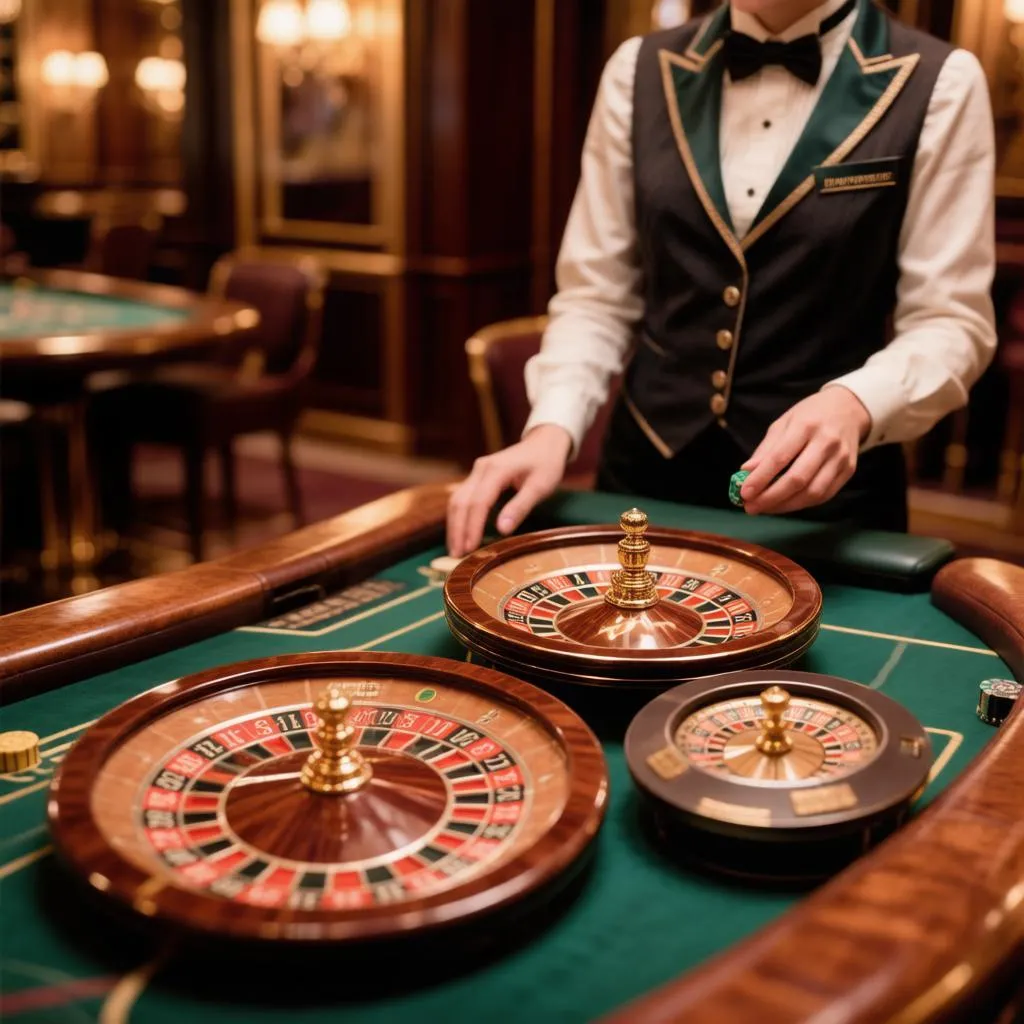
Open any live casino lobby today and you will find dozens of roulette tables fighting for your attention: a dealer spinning a physical wheel, a robotic camera watching an empty studio, a golden wheel paying 500 times on a single number. They all show the same 37 pockets, yet the experience, the pace and even the house edge differ from one table to the next.
Choosing between European, Speed, Auto and Lightning roulette is less about learning new rules and more about knowing what each format changes. Once you see what stays fixed and what moves, the right table for your budget and temper becomes obvious.
The common ground every live table shares
All four formats run on the standard European wheel: 37 pockets numbered 0 to 36, with outside bets on red, black, odd, even, dozens, columns and the inside bets on individual numbers, splits and streets. A straight-up win pays 35 to 1, a column pays 2 to 1, and the zero is what gives the house its mathematical edge of 2.7% on nearly every bet. No American double-zero wheels appear in these lobbies, which is already a quiet advantage over land-based casinos in many regions.
The physical element is what makes live roulette feel different from its digital twin. Real wheels are filmed in studios or actual casino floors, and although certified wheels and strict procedures keep results random, the sight of a real ball settling into a real pocket is the entire reason players pick the live section over the RNG version. Everything else — the interface, the chat, the statistics board — is decoration around that single ritual.
European roulette: the reference point
The classic European table is where every comparison should start. A live dealer takes roughly 45 to 60 seconds per round, there is time between spins for placing bets at leisure, and the full range of table limits is usually available, from casual minimums to high-roller rooms. Some tables offer French rules such as La Partage, which refunds half of even-money bets when zero hits and trims the house edge to 1.35% on those bets.
This format suits three kinds of players perfectly: anyone learning the game, anyone who treats sessions as long and relaxed entertainment, and anyone who wants the mathematically cleanest version of the game. Its one weakness is psychological rather than mathematical — the waiting between spins gives doubt plenty of room to grow, which is exactly what the faster formats were invented to fix.
Speed roulette: the same math in half the time
Speed Roulette, an Evolution concept now copied across the industry, compresses the classic round to about 25 to 30 seconds. The dealer drops the ball while betting is still open on some versions, and the closing window shrinks to a few seconds. The wheel, the payouts and the house edge remain identical to European roulette; only the rhythm changes.
That rhythm has consequences worth understanding. Faster spins mean you can burn through three times as many bets per hour, which accelerates the mathematical grind on your bankroll as reliably as it accelerates the excitement. Players who found themselves over-betting during long pauses at classic tables often feel calmer at Speed, simply because there is no downtime left to fill. It is a tool that rewards self-awareness: know which type you are before you sit down.
Auto roulette: no dealer, no waiting for a person
Auto roulette removes the human entirely. A real, physical wheel spins continuously in a studio, controlled by machinery, with a camera fixed on it from above. Bets are open while the ball is in motion, and a new round begins every 60 seconds or so around the clock. Nobody apologizes, nobody chats, nobody waits for other players to finish deciding.
The format shines in specific situations, and these are the clearest ones:
- Testing a strategy or a betting pattern with minimal cost, since minimum limits on Auto tables are often the lowest in the live section.
- Playing at odd hours, because the wheel never closes and never waits for a shift change.
- Low-stakes grinding, where the modest pace keeps hourly losses predictable and small.
What Auto lacks is atmosphere. There is no personality to react to, no dealer to greet you, and the endless loop of spins can blur one round into the next, which makes time management the real skill at this format.
Lightning Roulette: the multiplier gamble
Lightning Roulette, also from Evolution, is the outlier of the four. After bets close, lightning strikes between one and five random numbers, and struck numbers receive multipliers of 50x, 100x, 200x, 300x or 500x. A straight-up bet on a lucky number pays the multiplier instead of the standard 35 to 1. Everything else — red, black, dozens, splits — pays exactly as usual.
The catch is that the base payout for straight-up numbers is reduced from 35 to 1 down to 29 to 1 to fund the multipliers, which lifts the overall house edge on the game to roughly 2.9%, slightly worse than classic European roulette. Multipliers land only on straight-up bets, so chasing them requires covering numbers individually, and the variance is dramatically higher than any other live table: long stretches of small losses punctuated by occasional electric paydays.
A sibling family has grown around the concept, including versions where multipliers extend to outside bets or stack with chain bonuses, and newer premium tables add dealer showmanship on top. The core trade never changes: you accept a worse base return in exchange for lottery-style upside on single numbers.
The four formats side by side
The differences between these tables come down to four practical measurements: what the house takes, how fast rounds turn, whether multipliers exist, and how much bankroll each spin demands. Laying them together makes the trade-offs concrete.
| Format | House edge | Round length | Multipliers | Best suited for |
|---|---|---|---|---|
| European | 2.70% | 45–60 seconds | None | Beginners and long sessions |
| Speed | 2.70% | 25–30 seconds | None | Fast players who hate waiting |
| Auto | 2.70% | ~60 seconds | None | Practice, low stakes, any hour |
| Lightning | ~2.90% | 35–45 seconds | Up to 500x on straight-ups | Chasing big single-number hits |
Notice how modest the spread is. Three of the four formats share an identical house edge, and even Lightning’s penalty is less than a quarter of a percent in exchange for its upside. This is why table choice at live roulette is mostly a lifestyle decision rather than a mathematical one, with Lightning being the only genuine exception where the math itself changes character.
How to match the table to your goals
The right choice depends on what you want from the session, and a few honest questions reveal it faster than any comparison. Before loading a lobby, ask yourself:
- How long is my session meant to last, and does that budget survive the pace of a Speed table?
- Am I here for steady, even-money play or for the rare thrill of a multiplied straight-up win?
- Do I want interaction with a dealer, or do I play better without an audience?
- Am I practising, or playing for stakes that matter to me?
Answers like these usually eliminate two of the four formats immediately. A practising player with a small budget lands on Auto, a social player with time to spare lands on European, an impatient player lands on Speed, and a thrill-seeker accepts Lightning’s extra edge for its ceiling. Very few players belong everywhere at once, despite what lobby thumbnails suggest.
Mistakes that cost more than the edge
Formatting choices matter less than the habits players carry between them, and live roulette punishes a few specific ones consistently. The most expensive of them include:
- Chasing losses by raising stakes after a losing streak, which lets variance compound against a shrinking bankroll.
- Spreading chips across too many numbers at Lightning tables, buying tickets to a multiplier lottery that mathematically still favors the house.
- Ignoring table statistics histories, not because they predict anything, but because past spins on a fair wheel carry no information about future ones.
- Betting systems like Martingale without table-limit awareness, since every progression eventually collides with either the maximum bet or an empty wallet.
The honest position is that no betting pattern changes the 2.7% edge, and the best a disciplined player can do is choose games with clean rules, size bets so a session’s worst case is survivable, and treat every spin as paid entertainment rather than an investment opportunity.
Choosing once and playing well
The cleanest path through the live roulette section is also the simplest. Learn the bets and pace at an Auto or European table where mistakes cost least, settle into Speed only when you trust yourself to hold a staking plan at high tempo, and treat Lightning as a separate, higher-variance pastime rather than a substitute for the classics. Check whether French rules such as La Partage are available at classic tables, because that single rule quietly beats every other optimization in this comparison.
None of the four formats will hand you an advantage over the house, but all four will treat a prepared player fairly, in different rhythms. The wheel spins the same numbers everywhere; what changes from table to table is the company you keep, the speed of your decisions and the size of your dreams, and those are the levers that actually belong to you.